Monthly Archives: November 2008

Prelude to a New Article

Sandy with Crazy Daddy

I’m warming up for a new article. Getting the fingers limber and receptive to WORK. Thanksgiving was very cheerful and fun with the family– my parents, who live in the next town over, have had the festivities since I can remember. I told my mom I’d like to take it over in the future, but right now our house is way too small. We had Easter one year and that was a real hoot. So no major holidays in here, and if I ever do one again, it’s gonna be a potluck and someone else can make the bird (or it’s coming already cooked and garnished from Hinck’s Turkey Farm nearby.) I love one of the mottos from Alcoholics Anonymous: Keep It Simple, Stupid ( K.I.S.S. for short.)

I did have a nasty “shot” hangover from the Betaseron yesterday. Probably one of the reasons people don’t take interferons. I’m usually pretty good on it, and the flu-like side-effects have calmed down over the past few years, but I get what I call a rogue shot– similar to a rogue wave— where the effects are bigger and more turbulent than the shots before it. I get one about every two or three months. It feels like a really intense flu for the day: fever, chills, body aches, nausea, and a mind blowing headache. Lovely. So yesterday the household just lounged on the couches and watched the tube. Even the cat. Very supportive– thanks!

I went to the local community college last week and signed up for an abnormal psychology class, which comes in an online format. I took a library science course online about three years ago and I think the format’s great. Almost like independent study with a once-a-week meeting online. I’m mentally gearing up for this because I need something to do with my wandering brain. Something stimulating and interesting. Starts in January, just before my mind goes into hibernation, so not a moment too soon.

Here is some pretty exciting news: I was interviewed by New Mobility magazine a few months back about my lengthy disability case and one of the editors and then-columnist Josie and I got to talking about other things. She mentioned that she might be looking to pass the MS Life column on to a new columnist. We kept in touch and I submitted a sample column for their January issue. They notified me recently and told me I was hired to be the new columnist for 2009. The MS Life section is published every other month and it contains a profile of an MSer, a piece on coping, a piece on new research, and a wildcard. The January issue will have a profile on Joan from A Short in the Cord, giving information about her fantastic chat room. Parts of the mag can be viewed online at www.newmobility.com and I also found it at the main branch of our library system. The magazine is for active wheelchair users and the MS Life column provides news to those with moderate and progressive forms of MS.

Anything else new and exciting? Probably not. I have to admit that I live the placid, understimulating life of an 85 year old man. Which of course can be good and bad, depending on the day.

Now on to Copaxone and its advantages and its drawbacks…..

Avonex for Multiple Sclerosis

Avonex, Google Images

There are several injectable disease-modifying drugs on the market today to slow patients’ courses of relapsing-remitting multiple sclerosis. These medications are defenses against the number and severity of future relapses and resulting disability. The drugs range in effectiveness and are therefore used for different severities of RRMS. At this time, these drugs are only indicated for relapsing-remitting MS and are not definitely proven to help progressive courses, although a couple of the medications are still used for this purpose. No medications are 100% effective and there is currently no cure for multiple sclerosis.

Avonex* is one of the said injectable drugs, and like all of the other medications, it comes with its advantages and its drawbacks. It is a manufactured interferon— specifically beta-1a— which is a protein that is also naturally produced by the body. Avonex has been proven to reduce the number and severity of MS relapses in patients, as well as the level of disability caused by relapses, and it has been on the market since 1996.

Avonex’s Advantages:

  • The medication is only administered once a week, as opposed to the other drugs, one of which is injected daily
  • Avonex can be received in prefilled syringes or easy packets which can be mixed by the patient
  • The administration of Avonex causes less site reactions than most of the other medications
  • Avonex has more than 10 years’ worth of proven results

Avonex’s Drawbacks:

  • Being one of the interferon medications, Avonex can cause flu-like side-effects (fever, chills, nausea, and aches) for up to two days after a shot is administered
  • Avonex is the only medication that is injected intramuscularly (IM), and so it has the longest needle
  • Avonex can cause any of the following side-effects: depression, anemia, seizures (rare), heart abnormalities (rare), abnormal liver function readings, thyroid abnormalities, and reduced immunity to infections and illnesses
  • Avonex is thought to be the least effective drug for MS because it has the lowest dose with the least amount of administrations. Rebif, another drug with the same chemical composition, is given at a higher dose (subcutaneously or just under the skin) several times a week.

*any decision to take medication should be thoroughly discussed with your doctor

MS Cerebral (Brain) Attacks and Symptoms

The Brain: Google Images

Surprisingly, the least common area for a multiple sclerosis attack (only 3% of all relapses) is the cerebrum, or the vast area of the brain. Attacks to the cerebrum can cause demyelination to its nerves as well as brain atrophy, or shrinkage. Such relapses can cause the following symptoms in multiple sclerosis patients:

Cognitive Impairments

Although not as common as spinal cord or brain stem symptoms, cognitive disabilities are thought to affect about 50 to 60% of MSers over the courses of their diseases. Such impairments include short-term memory problems, a decrease in reasoning skills, vocabulary deficits (“fishing for words”), and problems with outside overstimulation and internally processing outside situations (confusion.) Only about 5 to 10% of those with multiple sclerosis develop severe cognitive problems.

Depression

Multiple sclerosis depression can be caused by several mitigating factors such as coping with a chronic and debilitating illness, taking medications that cause depression, and non-MS outside stressors (careers, financial situations, divorce, other illnesses, death, and so on.) MS depression can also be organic, or caused by the multiple sclerosis itself. Scientists now know that depression can arise from damage to nerves within the cerebrum. These nerves send and receive messages about emotions, and faulty nerves can misfire messages. Brain atrophy might also be responsible for organic depression.

Tonic Seizures

Although rare (occurring in approximately 5 out of every 800 MS patients), brief seizures can happen when there are lesions and inflammation in the cerebrum.

  • Reference:

Rosner, Louis J., MD and Shelley Ross. New Hope and Practical Advice for People with MS and Their Families. Simon & Schuster: New York, 2008.

Multiple Sclerosis and Denial/Acceptance

I have to tell you about my love affair with denial. Having had MS for a bunch of years now, I’ve tackled several ongoing issues that the disease has presented: fatigue, bladder and bowel problems, loss of balance, swallowing like a geriatric, and getting out the old cane for relapses when I walk like Charlie Chaplin. These issues I’ve come to accept with a little anguish and a bit of therapy, and it has been a long journey to acceptance since these symptoms often go into remission and try to convince me that I’m living without MS. I’ve also learned in the past few years that my emotional state with MS is never static: because the disease is so unpredictable, it is never safe for me to assume that I have my emotions completely figured out and that they will remain balanced indefinitely. It has taken me about three years to get the emotional situation to a point where I can accept the unknown and live my life not waiting for the other shoe to drop. Multiple sclerosis has a tendency to do this to people and as the disease progresses and more plans are thwarted, it becomes a bigger challenge to remain emotionally balanced. So I’ve recently learned the benefits of dealing with the emotional ramifications of MS with my divine social worker. I cannot express enough how much she’s kept me balanced and grounded on the continuous, unpredictable path that is MS. Just as MS continues, so does the fight to emotionally deal with it, and the methods are never permanent and can change with the course of the disease.

So here is my most recent lesson about denial, and probably one of the hardest to accept: I am trying to come to terms with the fact that I still need some sort of career to make me satisfied, but I have to let go of a choice that will not meet my needs. Anguish! MSers all know the dilemma of wisely picking and choosing what to do and what not to do. Being in relatively good shape despite my MS, I volunteer at my local library system a few short intervals a week. I love the damned library. I’ve worked there a couple of times in the past, but the multiple sclerosis always seems to get in the way. So now I am again in remission and my denial comes creeping back to me: maybe I can still get that library science degree and be a part-time librarian in a few years. Maybe this time it will be different. But the loads of books are still there, the lengthy walks to help patrons are still there, and the Family Medical Leave Act is still a difficult hurdle. So I have come to a practical, satisfying decision and I’m sticking to it: I love science and I want to continue going to school, so I’m going to take some entry-level psychology courses FOR ME. Not for a possible career, but if I continue taking the classes and a career develops, so be it. I love helping people and my local MS Society doesn’t have enough referrals for licensed professional counselors who deal with the issues of chronic illness (I’ve already inquired.) I don’t know if I will ever counsel anyone— on an hourly basis of course— but I took an intro psychology course a few years ago and loved it, and I’ve already gotten the required statistics class out of the way. One of my life goals is to earn a master’s degree. So who knows? Either way, I walk away fulfilled and with new knowledge that I can apply to everyday life. But I have to confess that the denial still lurks in the back of my mind and this choice is not without its pain.

MS Optic Nerve Attacks and Symptoms

Google Images

Optic neuritis, or the inflammation of the optic nerve that connects the eye to the brain, is the third most common type of multiple sclerosis relapse, making up approximately 17% of all attacks. 20% of all MSers experience this as their first acute attack. The optic nerve sends messages from the eye to the brain, describing visual clarity, color perception, and brightness. An attack of optic neuritis usually affects one eye. During an acute MS optic nerve attack (when the immune system attacks the myelin covering surrounding the optic nerve), the following symptoms may occur:

Blurred, murky vision: this can be intermittent or it can be a steady disruption of proper sight

Acute loss of vision: complete loss of vision in the affected eye may occur, and this too may fluctuate or remain steady during an attack

Eye pain: pain from the inflamed optic nerve can make moving the eye or even keeping the eye still very painful

Loss of or change in color vision: optic nerve inflammation can also cause a loss of or fluctuation in color clarity, making the visual field less vivid or “washed out”

The Afterglow of Joan’s Chat Room

Joan's Chat Room

Joan keeps rounding up more MSers at her chat room. Last night there were several Delawareans, the usual Taggie from Ohio (who is an absolute hoot), Denver Refashionista (she always likes to come on for a while), and Lisa from Brass and Ivory! Too funny. I think at one point we were talking about hamsters and guinea pigs? Wine and cruises were also discussed. Joan then had a good MS quiz about dealing with holiday stress. For someone who deals with pronounced fatigue, this is very important to her and others could definitely relate. The takeaway was that we MSers must care for ourselves first and put our feet down against unnecessary stress and demands. What a good topic for the evening. Thank you so much again, Joan. You’re the friendliest chat hostess and I’m sure everyone else can agree.

Joan’s next chat will be in early December. I wonder what the next topic will be?

New,Thinner Needle for Betaseron

I’ve been taking Betaseron (interferon beta-1b) for over three years and this is the only disease-modifying drug I’ve tried. Everyone is different, but for me this medication has worked well and has actually allowed me to recently go two years relapse-free instead of having the usual annual attack. So the news of a thinner needle excites me. Rebif has been known in the past to have the thinnest needle (29-gauge) out of the three subcutaneous injectable drugs–Copaxone, Betaseron, and Rebif. Now Betaseron’s 30-gauge needle (replacing the original 27-gauge one) is the thinnest on the market. For patients this means a possible decrease in skin surface reactions and pain. This same size needle is also used for pediatric injections and insulin treatments for diabetics.

Along with the thinner needles, a new autoinjector has been created. Old autoinjectors are not compatible with the new needles because they might not fully administer the entire dose of Betaseron.

New needles and autoinjectors are expected to be available this month (November 2008.) To find out more about switching to the 30-gauge needles, contact BETAPLUS (formerly MS Pathways) at 1-800-788-1467.

References:

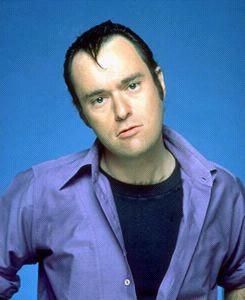
Squiggy Has Multiple Sclerosis

Squiggy, Google Images

The story of David Lander, aka Squiggy, started in Brooklyn, NY, in 1947. As a teenager, Lander attended the High School of Performing Arts in Manhattan and later attended college at NYU and Carnegie Tech.

After moving to Hollywood, Lander did some minor roles and was eventually discovered because of his unique voice and humor as he worked for an answering service. He was then given a job on a radio program called “The Credibility Gap”, a humorous news show.

It was at this radio station that David Lander met his future “Laverne and Shirley” sidekick Michael McKean, and the two put together the team of Lenny and Squiggy. One night, Penny Marshall just happened to be listening to their live show, and had the two audition for her father’s new sitcom “Laverne and Shirley”, in which she was starring. Soon Lenny and Squiggy were nationally known.

I remember watching this show as a kid and just howling over some of the crazy antics. My favorite scenes were when Lenny and Squiggy, the two deranged neighbors, would pop in. Squiggy (did you know that his full name was Andrew “Squiggy” Squiggmann?) always appeared to be some clown with a hair-brained plan that involved the girls. Too funny.

Not so funny is the fact that in real life, David Lander began to experience symptoms of multiple sclerosis shortly after the show ended (1985.) During this time period, there wasn’t a lot to do about modifying the disease— disease modifiers didn’t hit the market until the 1990’s— and Lander’s doctor told him he had a good chance of ending up in a wheelchair.

David consulted with his wife and daughter about what to do. It was decided that he would keep silent in order to protect his career, since aging and being sickly were (and are) highly frowned upon in Hollywood. He went on to do voiceovers for a number of feature films and TV shows, including “A Bug’s Life”, “Jungle Cubs”, and “101 Dalmatians.” Appearing in several other films, he was featured as the baseball game announcer in “A League of Their Own.”

Landers and his family, Google Images
Finally in 1999, Lander publically announced that he had MS. He was not in a wheelchair, but he admitted that he suffered from some of the embarrassing social blunders that multiple sclerosis can cause, such as unsteady walking and dropping things. In 2000, he was named the national MS Society Ambassador of the Year for his work at promoting MS awareness. In the same year Lander published his autobiography Fall Down Laughing: How Squiggy Caught Multiple Sclerosis and Didn’t Tell Nobody.

David Lander’s biggest piece of advice to anyone with MS is to fight it. He strongly advocates the use of any of the disease-modifying drugs and says that when he gives himself an injection, he thinks, “Wow! Look what I did for me.” He still works closely with the Nat’l MS society to promote MS awareness.

Probably the most unique thing about David Lander is his current baseball career: “I use to own a team in Portland. I owned 5 percent of the Portland Beavers, but now I’m a scout for the Seattle Mariners,” he says.

References:

Melissa Etheridge Concert!

Google Images

Be back soon….I’m going to see Melissa Etheridge on Saturday night at The House of Blues. 18th row center! I’m really stoked because I’ve loved her since the early ’90’s when I first heard her single “Bring Me Some Water.” I like a lot of different styles of music, but I’m partial to good rock or blues with a guitar-playing singer. Plus I admire Melissa’s involvement with breast cancer research and prevention. Yahoooooo!

One more note: I welcomed a lot of chaos into my household during these past two weeks. We’ve had an ongoing, costly plumbing problem that is finally fixed and I just did about 9 loads of really ripe laundry. Yahooooooooo!

« Older Entries